
· 5 min read

Branded at Birth

Francis Tuffy
Francis Tuffy · Editor
Branded at Birth

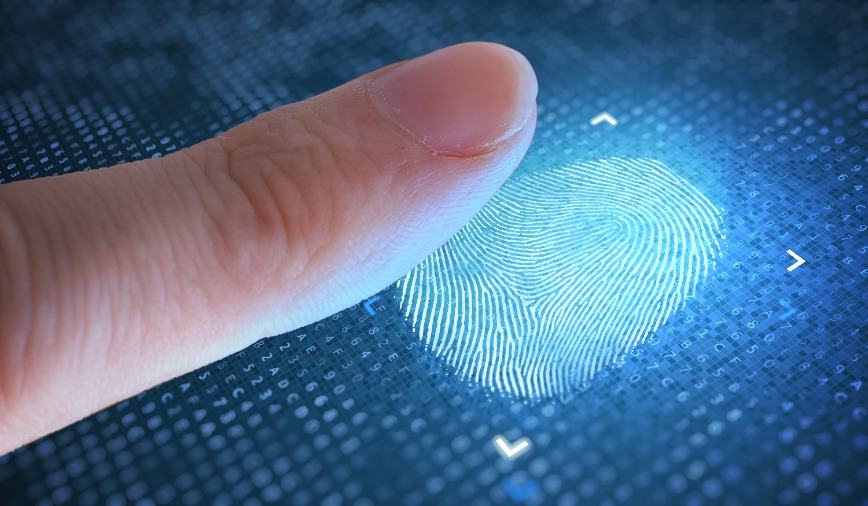
Definitive proof that fingerprints are a unique biometric at birth has been published by a team of academic researchers in the journal Cell. But while the paper seems to confirm that they are unique – are fingerprints immutable and reliable?

As part of a recent anecdotal community poll 1, end users were asked, ‘what is your favourite biometric authentication option?’ The top two preferred responses, by far, were face recognition and fingerprint; however, this may simply be a reflection of your choice of smartphone.

In his article ‘Emerging Fingerprint Technologies for Smartphones’, (see IDN January 2023), Dr Alan Hodgson examined how improvements in sensors, particularly those used in under-screen smartphones, are driving the increased use of fingerprint readers as the first level of identity verification. The issue here for the ID and secure document community is not so much that fingerprint readers are incorporated into smartphones to validate the identity of a smartphone user, but that identity validation on a phone is increasingly being accepted as a proxy for proof of universal identity.

The purpose of this article is that while it is good news that the new research confirms fingerprint uniqueness from birth – something that many of us had assumed to be the case – can we be equally sure about the immutability, reliability and potential attacks on fingerprints and their testing?

Uniqueness

The paper titled ‘The developmental basis of fingerprint pattern formation and variation’ 2 explores the development of fingerprint ridges, showing they are structures in the thin layer of tissue on a body’s surface (epithelium) with a spatial pattern governed by a Turing pattern. The structures develop similarly to hair follicles before forming into the features used as biometrics.

The Turing pattern is a concept thought up by English mathematician Alan Turing in a 1952 paper titled ‘The Chemical Basis of Morphogenesis’ 3 which describes how patterns in nature, such as spots, ridges and swirls, can arise naturally and autonomously from an homogeneous, uniform state. Turing examined the behaviour of a system in which two diffusible substances interact with each other, and found that such a system is able to generate a spatially periodic pattern even from a random starting condition – such as in the formation of fingerprints.

The development of these structures is governed by molecular and cellular mechanisms prior to birth, according to the research team of more than 20 researchers from eight academic institutes including the Fudan University, the Czech Technical University, University of Oxford, and the Chinese Academy of Sciences.

The technical paper explains the formation of fingerprint arches, loops, and whorls into patterns before birth, and explains the departure of skin structures from ‘hair placode development’ - the areas of thickening of the skin surface that give rise to structures of the sensory nervous system. The authors of the study identify a particular gene involved in determining where ridge patterns are triggered, and an approximate period of prenatal development at which ridges begin to form fingerprints.

So, although they are determined by each individual’s genetic information, fingerprint pattern development is influenced by physical factors (the exact location of the foetus in the uterus, the density of the amniotic fluid, among other things), so that even in identical twins the fingerprints of two individuals cannot be the same.

Immutability

Immutability is an important feature of any biometric, because without confidence that the natural attribute does not change and cannot be altered during the lifetime of an individual, there can be no confidence that the biometric captured at a particular time will be true at some point in time later.

So, whilst the paper shows fairly conclusively that fingerprints do have a ridge pattern that develops from an underlying random starting point – does that mean that they are immutable? The good news here, is that there is no scientific evidence (at least that I could find) that suggests otherwise.

There is however, the exceptional situation in which people are born without fingerprints. The genetic disorder is known as adhermatoglyphia and five extended families worldwide are known to be affected by the condition.

Reliability

The roots of fingerprint recognition are in the detection of criminals at crime scenes. In the late 1870s, Henry Faulds, a Scottish doctor and missionary, became involved in archaeological digs in Japan and noticed on shards of ancient pottery the fingerprints of those who had made them. He began to study modern fingerprints and wrote to Charles Darwin with his ideas. In 1880, Faulds published a paper in Nature magazine on fingerprints, observing that they could be used to catch criminals and suggesting how this could be done.

Much of our trust in fingerprints as a biometric is grounded in the perceived infallibility of fingerprint evidence: ‘if its good enough for evidence in court then it must be good enough to identify a person’. But is this assertion as close to 100% true as is realistically feasible?

Research by Dr Dror at the University of Southampton (UK) is casting doubt on the commonly held belief that fingerprint analysis is infallible. Five fingerprint examiners were tested with examples of prints that they had previously identified as positive matches in court five years earlier. In the new evaluation only one of the experts agreed with his/her previous decision. Three contradicted their previous judgement and decided that the prints are a no-match and the fourth wasn’t sure 4.

Spoofing

Taking a high-resolution photo of your fingertip and printing it on a paper is probably the easiest type of spoof. This spoof, however, will fail on most fingerprint recognition systems. More sophisticated methods like 3D printing to create a mould and then filling the mould with a flexible material like silicon are on the increase – as are the means of detecting this type of spoof.

And if you were thinking about altering your fingerprints to escape justice or change identity, wounds and scratches can obliterate part of a fingerprint, but it will still grow back to the same individual pattern after a month or so.


1- https://securityboulevard.com/2023/01/poll-result-what-is-your-favourite-biometric-authentication-option 

2 - www.cell.com/action/showPdf?pii=S0092-8674%2823%2900045- 

3 - www.dna.caltech.edu/courses/cs191/paperscs191/turing.pdf 

4 - https://onlinelibrary.wiley.com/doi/abs/10.1002/acp.1130 

Subscriber content

Read the full article

Full access to ID & Secure Document News articles, newsletters and archives.

Sign Up to ID & Secure Document News Weekly

Receive regular updates on the latest news and articles posted on our website.

Verity

Verity

AI search assistant

Ask me anything from the ID & Secure Document News archives.

free questions remaining