Thoughts on Producing Travel Documents
In this opinion piece, Lic Mónica Peralta (Forensic Document Expert) looks at the current state of physical document security printing and gives her thoughts on how it might be improved in the age of physical/digital co-existence.
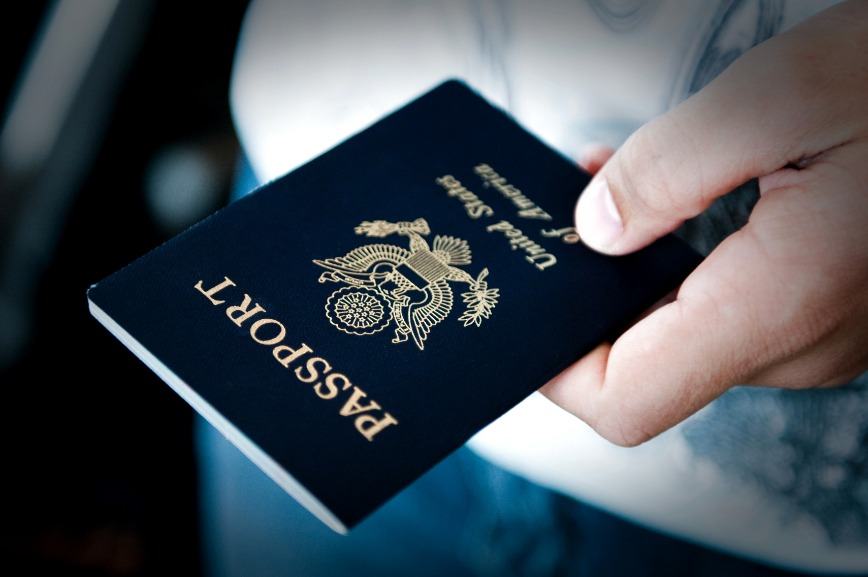
Much has been written about the innovation and security that travel documents must display. We know that the passport is an official document issued to a person by a particular country that guarantees their citizenship status. Security elements are added to this document in addition to typical designs, which not only embellish the visa pages, but also strengthen their circulation and prevent counterfeiting and adulteration.
For years, paper has been used as a substrate. This allows numerous security elements, integrated combinations, microcuts, and protection with ultra-thin holographic laminates.
Paper is suitable for a wide variety of inks, including those that change colour when the document is tilted, those that are optically variable, those that provide security backgrounds and those that react under different wavelengths (UV 365, 312 and 254, and IR, among others).
Paper supports inkjet printing for customising the data page, as well as laser printing. It allows printing of the main photograph and ghost image in the visual inspection area of the document, as well as printing a third image on the page next to the data page. It also allows the addition of biometric data and barcodes. Regarding the security measures inserted in its cellulose mass, paper can support multi-tone watermarks, and security threads with different design options.
Nowadays, the implementation of polycarbonate is increasingly frequent in document-issuing countries. In my technical opinion, polycarbonate permits the application of dry offset on the background, since it achieves good ink anchorage. It also allows colour prints when combined with polyester.
Currently, the most prestigious companies in the security graphics industry have developed highly efficient integrated solutions, such as ink toner applied with printing techniques for unequivocal immediate verification.
In addition, polycarbonate allows the incorporation of numerous security elements such as CMYK background prints, barcodes, magnetic and optical stripes, besides UV fluorescent inks and IR absorption. To protect these elements from daily handling, holographic laminates can be used which also contribute to security with colour and movement.
Relief effects in polycarbonate material are perceptible to the touch, and the material is also suitable for incorporating lenticular structures. It supports combining numerous built-in security measures with images, numbers, and additional information. In terms of material engineering, it allows the incorporation of a chip carrying information on the passport holder, including photograph and fingerprints.
Having said that, I feel it necessary to set out a few observations. My approach is to link the different actors that interact with travel documents, namely the document holders who use them to travel and exercise their rights, the inspectors (professionals or otherwise) who control these documents at ports of entry/exit, and the graphic producers of security documents.
The first group involves the user, the owner of the document, who is unaware of the work of the security graphic industry, the cost that graphic production requires, and the time needed for each of the printing processes, to ensure the user is protected against identity theft. There is also a lack of knowledge about the validity and expiration of the document.
Public Education
Thought 1: we need dissemination campaigns relating to the production of documents to educate citizens regarding the care and value of their identity, similar to the campaigns run by central banks when a new series of banknotes is issued.
The second group includes the officials who control documents, who must not only receive constant training, but must also be able to perform the controls in an environment with optimal lighting. This condition is not always fulfilled given the different physical scenarios. Added to this is the impatience of users who request immediate attention.
Since the development of laminates protecting the polycarbonate data page of users, and despite the fact that the design optimises the security of the document, such innovation cannot be taken into account in every detail at the time of control.
The reason for this is that inspectors are conducting multiple activities at once: data uploading, additional checks in addition to screening for basic security measures, establishing and authenticating the identity of individual standing in front of them, reading and interpreting issued visas. It is therefore not always ideal to enhance the biographical data page with elements that cannot be truly examined in a few moments.
Security and Design Harmony
Thought 2: we need designs and security to be in perfect harmony, but we must seek a new way to eliminate complex designs to streamline human readable controls.
Within the third group are the graphic producers of documents, who face the high costs of production required to comply with standardised security measures, recommended by the International Civil Aviation Organisation (ICAO).
There is a lack of trained staff in the graphics domain. They do not have the appropriate experience in activities such as ink, colour and gloss control, and compliance with the physical properties of substrates, among other capabilities.
There is also a need for graphic machinists with specific knowledge of ink drying techniques on plastics, which can be more time consuming and can lead to reprinting problems.
These are just some of the complexities highlighting the graphic security activity, which require an ever-increasing number of specialists in this field.
Technical Training
Thought 3: we need to train specialists for technical performance in the graphic industry. Although digitisation broke into traditional graphics, the reality is that physical documents are still necessary to complement digital validation.
As a final thought, the question that continues to keep me attentive is knowing that travel document fraud will not stop. On the contrary, new modus operandi are currently being put in place regardless of the counter-measures implemented.
The great dilemma that I perceive is the ease of access to intrinsic details relating to the security graphic production domain, which are freely disseminated by social networks; information that criminal organisations are using to their own advantage.
Subscriber content
Read the full article
Full access to ID & Secure Document News articles, newsletters and archives.