· 4 min read

The Vital Importance of Proof of Health Status Interoperability

Francis Tuffy
Francis Tuffy · Editor
The Vital Importance of Proof of Health Status Interoperability

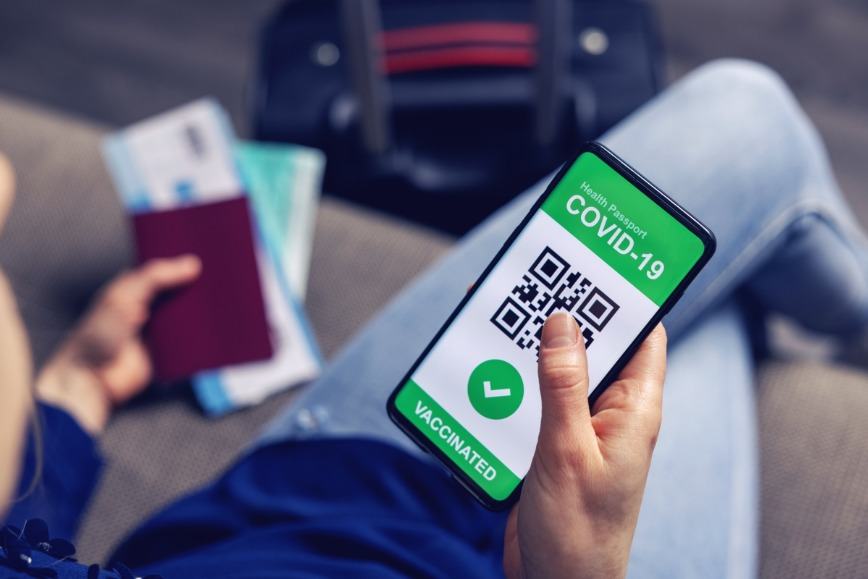
Learning from the COVID-19 pandemic response, the World Health Organisation (WHO) has recognised that there is a gap and continued need for a health status passport.

And so, it has launched the Global Digital Health Certification Network (GDHCN) – a global mechanism that can support bilateral verification of the provenance of health documents for pandemic preparedness and continuity of care.


GDHCN (© WHO).


Standardisation and interoperability

In the middle of March 2021, Ursula von der Leyen, President of the European Commission, introduced draft legislation proposing an EU Digital COVID Certificate (EU DCC) to facilitate safe free movement inside the EU during the pandemic. The EU DCC would serve as an assurance that a person had been vaccinated against COVID, received a negative test result or recently recovered from COVID.

By the end of the summer of that year more than 590 million EU DCCs had been generated and according to the European Commission it had set a ‘global standard’, being accepted by 43 countries with more discussions in play. There soon evolved an elaborate, rapidly shifting network of bilateral arrangements between authorities issuing health passports that established equivalence between and acceptance of each other’s documents.

In addition to its benefits to public health, the EU DCC (and other Proof of Health Status documents issued by governments) played a vital role in maintaining some degree of international travel – which allowed airlines to continue flying – admittedly at a vastly reduced level.

At the time, Reconnaissance published the White Paper ‘Vaccination Certificates and Immunity Passports’ 1 which noted that ‘standardisation and interoperability is inevitable so as to navigate the hundreds of bilateral arrangements that are already emerging’.

The paper also called on the WHO to take a lead role in establishing a globally recognised proof of health status certification scheme.

WHO steps up

To meet this need, which is in line with its ‘Global strategy on digital health’ priority actions’, WHO has established the Global Digital Health Certification Network (GDHCN).

The GDHCN builds upon the experience of regional networks for COVID-19 Certificates and takes up the infrastructure and experiences from the EU DCC, which has now seen adoption across all member states of the EU as well as 51 non-EU countries and territories. In addition, the GDHCN has been designed to be interoperable with other existing regional networks specifications.

The GDHCN can be used as an infrastructural building block to support additional use cases, which may include, for example, the digitisation of the International Certificate of Vaccination or Prophylaxis, verification of prescriptions across borders, the International Patient Summary, verification of vaccination certificates within and across borders, and certification of public health professionals (through WHO Academy).

Expanding such digital solutions will be essential to deliver better health for people across the globe.

How it works

The GDHCN is a trust network that is a digital reflection of the trust WHO already has with member states. The trust network operates through software infrastructure that enables member states to bilaterally verify the authenticity of digital records and health certificates through an interoperable trust architecture, without WHO participating in any verification processes but acting as a ‘trust anchor’.

As the trust anchor, WHO is implementing an onboarding process to establish technical and governance procedures for digital trust between WHO and each member state, and thus, between member states participating in the trust network. WHO will not hold or otherwise have access to any individual data.

Participating member states voluntarily submit public keys into a directory managed by WHO, so they are shared in a trusted manner with other member states. These public keys then can be used to verify that digitally signed health credentials (eg. immunization cards, health records) were issued by a recognised authority in the GDHCN.

Regional and global trust networks are already widely used today for when the provenance of information must be certified and verified such as a passport or a website. The GDHCN is designed to leverage existing investments by jurisdictions that were made under the COVID-19 response and provide the digital health infrastructure needed for resilience in future epidemic and pandemic responses, and to deliver better health to all by enabling the use of digital personal health records for continuity of care.

What about China?

It was not so long ago that air travel was considered so hazardous that many companies banned business travel, except under exceptional circumstances. While it has taken some time for WHO to step up and take a lead in health status interoperability (in their defence they can only move as fast as the will of their collective membership), one serious question remains that could jeopardise the global success of the GDHCN.

Absent from the list of existing regional networks specifications with which the GDHCN has been designed to be interoperable (EU DCC, ICAO VSD-NC, DIVOC, LACPass, SMART Health Cards) – is China. Hopefully, this was not an exhaustive list on WHO’s web page 3 for, without China’s involvement, the GDHCN is destined to be inoperable in the most populous country on the planet.

China’s International Travel Health Certificate (ITHC), which was established during COVID, was always seen as a temporary solution, only for Chinese citizens travelling abroad during the pandemic. China has since stopped using the ITHC and we wait to see whether there will be a successor supporting both national and international travel that could be included in the GDHCN.

1 - https://estore.reconnaissance.net/vaccination-certificate/

2 - www.who.int/publications/i/item/9789240020924

3 - www.who.int/initiatives/global-digital-health-certification-network

Subscriber content

Read the full article

Full access to ID & Secure Document News articles, newsletters and archives.

Sign Up to ID & Secure Document News Weekly

Receive regular updates on the latest news and articles posted on our website.

Verity

Verity

AI search assistant

Ask me anything from the ID & Secure Document News archives.

free questions remaining