· 4 min read

The Bad, the Very Bad and the Bits In Between

Francis Tuffy
Francis Tuffy · Editor
The Bad, the Very Bad and the Bits In Between

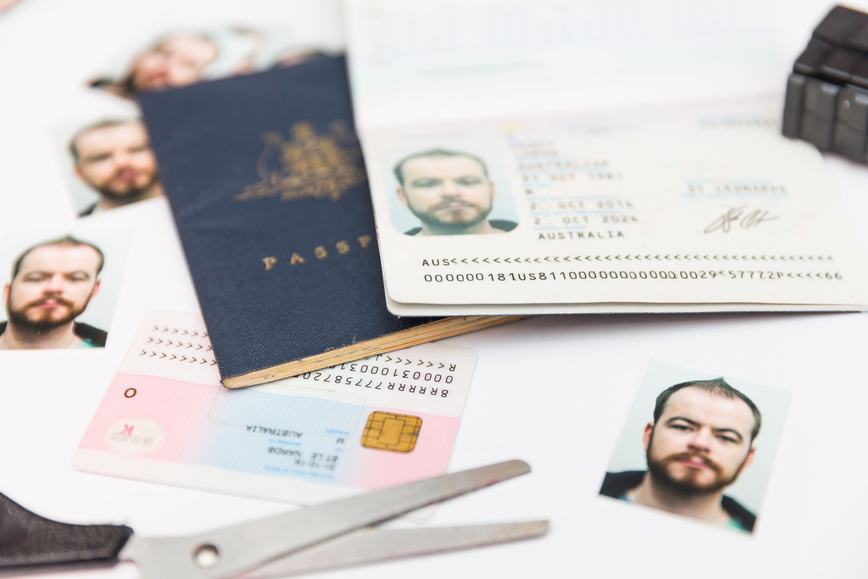
The use of fake ID’s has for some time been linked with a whole range of serious crimes including terrorism and people smuggling as well as, at the other end of the criminality spectrum, less serious misdemeanours such as under-age drinking. Of course, the crime of under-age drinking can lead to some serious consequences – but then so can over-age drinking!

But there is a whole range of other crimes that fit between these two extremes and go largely under reported.

One case that was reported in the local Memphis News was of a Tennessee (US) man who has been accused of buying more than $140,000 worth of cars under someone else’s name. Police say that the man went to two dealerships and bought three cars using a fake ID. In all of these purchases, police say the accused used a fake Mississippi driving licence with his picture on it. According to court documents, false documents were submitted stating that the man was employed in a managerial role making $5,000 a month.

After he was caught driving one of the cars, he was arrested and charged with identity theft, forgery and theft of property.

Another case, again from the US, is of a Maryland man who has recently been sentenced to nearly eight years in federal prison for COVID-19, insurance and aggravated identity theft schemes.

In what federal prosecutors called an access device conspiracy, the defendant admitted arranging the delivery of fake unemployment insurance cards to co- conspirators, along with instructions on how to use them. In his guilty plea, he said he used the identities of more than 50 people, costing the state and federal government over $900,000 in losses.

These isolated cases are indicative of the middle ground of criminal activity linked to falsifying ID documents. True, no one was murdered, abducted or physically injured – but try telling the car dealerships or the US government that these are victimless crimes.

With this range of criminal activity, all of which are linked to illegal use of identity, how do the courts deal with the specific crime of identity fraud when it can act as an enabler to such a vast range of potential knock-on crimes?

Sticking with the US justice system, the legislation that covers the misuse of identity (at least in the physical world), is the Identity Theft Penalty Enhancement Act, which amended Title 18 of the United States Code to define and establish penalties for aggravated identity theft and made changes to the existing identity theft provisions. Under the new law, aggravated identity theft occurs when a person ‘knowingly transfers, possesses, or uses, without lawful authority, a means of identification of another person’s identity during the execution of certain crimes such as theft of money and property, embezzlement and false statements regarding Social Security and Medicare benefits or embezzlement’ 1.

The list also includes instances when identity theft has been used as one step in a process of more serious crimes, such as terrorist acts, immigration violations, and firearms offences.

The penalty for aggravated identity theft is a term of imprisonment of two years in addition to the punishment provided for the original crime committed. Offences committed in conjunction with certain terrorism offenses are subject to an additional term of imprisonment of five years.

Anyone working in the enforcement area of ID fraud will probably be acutely aware that whilst the Act attempts to codify offences into different levels of ‘seriousness’, the reality on the ground is that criminals don’t recognise these delineations and will probably use falsified IDs for a collection of crimes that go across all levels.

Additionally, not only do criminals use fake IDs as an enabler to commit offences across the full spectrum of crimes, but the corollary is also true. Namely, criminals producing fake IDs are likely to counterfeit other government issued documents and goods.

But, despite continuing news reports of seizures of collections of fake IDs in the thousands 2, this pales into insignificance compared to their online counterparts.

During the pandemic, large-scale scams started seeing imposters filing claims for unemployment benefits 3, using the names and personal information of people who had not filed claims. People only learnt about the fraud when they got a notice from their state unemployment benefits office or their employer about their supposed application for benefits. The figures for these online identity thefts run into the hundreds of thousands.

In 2020, the US Federal Trade Commission received 394,280 reports about government benefits fraud 4 – overwhelmingly about identity theft involving unemployment insurance benefits – compared with 12,900 reports in 2019.

As the ID and secure document industry undergoes a transition from designing physical to digital documents, so the criminals are getting better at setting up identity scams through online applications that offer little in the way of personal information protection. To complete the fraud often requires the printing and distribution of the most basic and unprotected physical documents.

There is a lot of work being done at the moment to improve the verification of online identities – which is a good thing.

But maybe it’s time for law makers and government agencies to recognise that securing online ID is not the only preventative measure to be made, when the associated physical documents are so easy to counterfeit and manipulate.


1 - https://itlaw.fandom.com/wiki/Identity_Theft_Penalty_Enhancement_Act_of_2004#cite_note-1

2 - https://eu.usatoday.com/story/news/nation/2019/11/27/customs-agents-seize-thousands-fake-ids-counterfeit-items/4324778002/

3 - https://blog.fraudfighter.com/u.s.-identity-theft-cases-double-in-2020-compared-to-2019

4 - https://www.ftc.gov/business-guidance/blog/2021/02/identity-theft-awareness-week-starts-today

Subscriber content

Read the full article

Full access to ID & Secure Document News articles, newsletters and archives.

Sign Up to ID & Secure Document News Weekly

Receive regular updates on the latest news and articles posted on our website.

Verity

Verity

AI search assistant

Ask me anything from the ID & Secure Document News archives.

free questions remaining