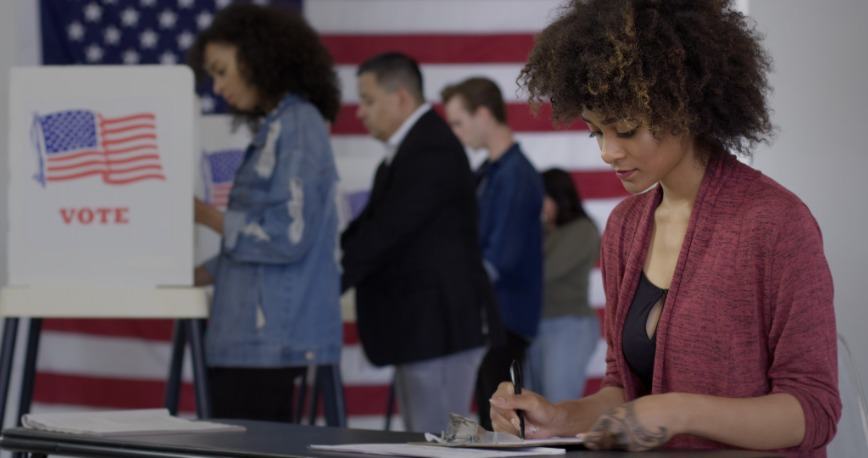
US Voter Identity Requirements and ID Laws
On 6 January 2021 a mob stormed the US Capitol carrying placards bearing the ‘Stop the Steal’ emblem, which supported the notion that widespread voter identity fraud had distorted the outcome of the 2020 Presidential election. At the heart of the claim were allegations of vote rigging by a variety of means – most of which required voters taking on false identities (see AN November 2020).
After several state level investigations into the allegations, lawmakers concluded that there was no evidence of widespread fraud. In this feature article ID & Secure Document News™ takes a look at what the National Conference of State Legislatures has to say about the different Voter ID requirements and laws around the US.
Voter identity requirements
A total of 36 states has laws requesting or requiring voters to show some form of identification at the polls, 35 of which are in force in 2021. (North Carolina's law has a temporary injunction on it, as of 31 December 2019.)
The remaining 14 states use other methods to verify the identity of voters. Most frequently, other identifying information provided at the polling place, such as a signature, is checked against information on file. In these states, voters can cast a ballot in person on Election Day without showing an ID document. These states have ‘nondocumentary’ ID requirements, meaning voters must verify their identity in other ways, such as by signing an affidavit or poll book, or by providing personal information.
Variations in voter identification laws
Voter ID laws can be categorised in two ways. First, the laws can be sorted by whether the state asks for a photo ID or whether it accepts IDs without a photo as a means of authentication.
Some states request or require voters to show an identification document that has a photo on it, such as a driver’s licence, state-issued identification card, military ID, tribal ID, and many other forms of ID. Other states accept non-photo identification such as a bank statement with name and address or other document that does not necessarily have a photo.
Using this categorisation for laws that are in effect as of July 2021, 18 states ask for a photo ID (although, as above, North Carolina's is on hold based on a preliminary injunction from a federal judge) and 18 states also accept non-photo IDs.
Second, the laws can be divided by what actions are available for voters who do not have ID. If a voter fails to show the ID that is asked for by law, states provide alternatives. These laws fit into an additional two categories: non-strict and strict.
Non-strict: At least some voters without acceptable identification have an option to cast a ballot that will be counted without further action on the part of the voter. For instance, a voter may sign an affidavit of identity, or poll workers may be permitted to vouch for the voter.
In some of the ‘non-strict’ states (Colorado, Florida, Montana, Oklahoma, Rhode Island, Utah and Vermont), voters who do not show required identification may vote on a provisional ballot. After the close of Election Day, election officials will determine (via a signature check or other verification) whether the voter was eligible and registered, and therefore whether the provisional ballot should be counted. No action on the part of the voter is required. In New Hampshire, election officials will send a letter to anyone who signed a challenged voter affidavit because they did not show an ID, and these voters must return the mailing, confirming that they are indeed in residence as indicated on the affidavit.
Strict: Voters without acceptable identification must vote on a provisional ballot and also take additional steps after Election Day for it to be counted. For instance, the voter may be required to return to an election office within a few days after the election and present an acceptable ID to have the provisional ballot counted. If the voter does not come back to show ID, the provisional ballot is not counted.
The patchwork of voter ID requirements in the US has grown over many election cycles, with each state making its own rules and regulations. This makes for a complex, confusing and expensive electoral process but as the various investigations after the 2020 elections showed, from both sides of the political divide, the system keeps fraud below a level that affects the outcome.
The confirmation of the robustness of the voter ID system is even more reassuring during an election that was held during some of the worst days of the pandemic in the US. This accounted for person-not-present voting playing a significant role in the US 2020 election with a record number of voters, in excess of 65.6 million, casting postal votes and five states – Colorado, Hawaii, Oregon, Utah and Washington— holding elections almost entirely by mail.
Subscriber content
Read the full article
Full access to ID & Secure Document News articles, newsletters and archives.