
· 3 min read

Health Status Proof – Time to Step Up

Francis Tuffy
Francis Tuffy · Editor
Health Status Proof – Time to Step Up

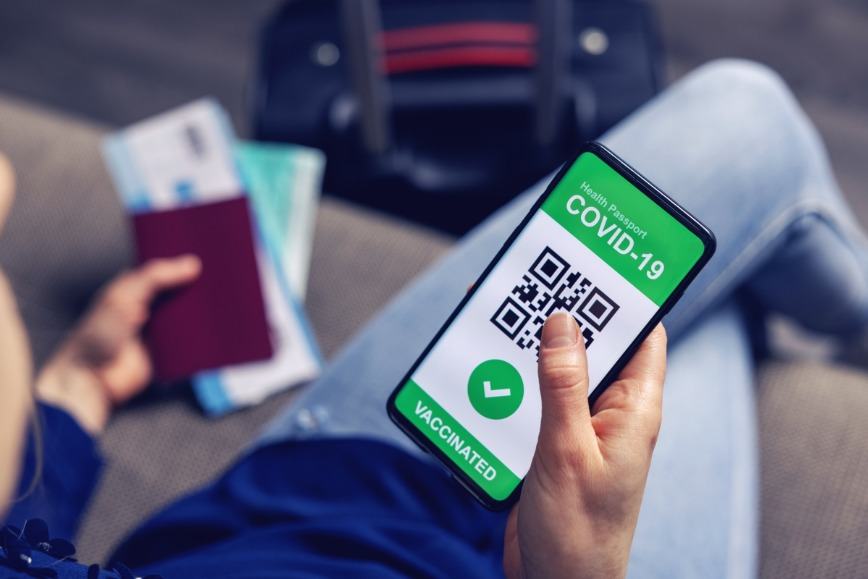
Writing in the introduction to Reconnaissance International’s white paper ‘Vaccination Certificates and Immunity Passports – Health Status Proof’ 1 in May 2021, I wrote that ‘standardisation and interoperability (the long-hand for ‘passport’) is inevitable to navigate the thousands of bilateral arrangements that are already emerging between border controls and travellers, airlines and passengers, employers and employees, educators and students, venue managers and guests, and medical professionals and patients’.

Six months later, after the EU and China both successfully introduced their versions of health status certification and the US walked back from federal vaccination certificates, we are in the throes of another COVID-19 variant that is forcing governments to again restrict travel between countries.

As concerns continue to swirl around whether immunity status passports are potentially discriminatory, non-inclusive and threaten citizens privacy, evidence is beginning to mount that the EU’s Green Pass helped its tourism sector during the summer and that an impending deadline for enforcement of health status proof accelerates take up of vaccinations – particularly amongst the young.

Against all of the actions of governments and authorities to establish a workable certification programme for its citizens, one question still remains. Who is taking a lead on standardisation and interoperability on a global scale?

In fairness, IATA’s Travel Pass and ICAO’s Health Certificates for International Travel (including specifications for Visible Digital Seals) goes some way to easing the burden on the traveller in helping to satisfy entry requirements on the basis of health across borders. And, from my rudimentary knowledge of the workings of the ISO, it is not up to that body to initiate themes for international standardisation, but rather to respond to requests from the competent authorities of member countries.

So, I was really pleased to hear Nataschja Ratanaprayul, Technical Officer, Public Health Technology, Department of Digital Health and Innovations at the World Health Organization present the WHO’s guidance to member states at the first webinar in a series called the ‘Road to Border Management and Identity Conference’. While the actual conference will not take place until December 2022 in Bangkok, Thailand, this first episode titled ‘Digital Health Certificate for Cross-Border Mobility’ 2 took place online on 2 December 2021.

Nataschja was at pains to point out that this is not a policy document, but rather is a clear set of guidelines for how member states might implement digital health pass systems and technologies in ways that can interact with approaches used in other countries.

The WHO is already in the process of producing technical specifications and implementation guidance on the Digital Documentation of COVID-19 Certificates (DDCC), with 11 design principles covering functionality, data representation, national trust architectures, ethics, privacy protection, open standards and avoidance of vendor lock-in (see IDN June 2021).

The WHO Digital Documentation of COVID-19 Certificates: Vaccination Status (DDCC:VS) demonstration document 3 contains an overview of high level use cases for digital COVID-19 vaccination certificates. These include workflows; core data elements mapped to standard code systems; functional and non-functional requirements; an overview of digitally signing a certificate with public key infrastructure (PKI) technology; implementation guidance regarding ethical considerations, privacy and data protection principles, and national governance considerations.

On the question of technology inclusion, so that citizens without a smartphone or connection to the internet are not excluded, Ratanaprayul said: ‘it should be possible to potentially have something that’s hand-written on paper, but then have a QR code that’s embedded on it that can be verified’.

I started off, in May’s white paper, with the conviction that the hurdles to proof of health status passports would be technical – and that made them solvable. Companies in the private sector are pressing ahead with products, systems and solutions that offer open platforms that will work with pretty much any data structure, public/private key and code symbology.

Having followed this topic for over a year now, I have come to the conclusion that the technical issues of standardisation and interoperability are relatively insignificant compared to the hurdles created by lack of leadership.

Francis Tuffy will be presenting a paper on ‘Proof of Health Status – International Comparisons 2022’ at the Optical & Digital Document Security Conference – Vienna, Austria 11-13 April 2022. Travel restrictions allowing.


1 - https://estore.reconnaissance.net/vaccination-certificate/

2 - https://www.youtube.com/watch?v=eYhQfkhDPUQ

3 - https://worldhealthorganization.github.io/ddcc/index.html

Subscriber content

Read the full article

Full access to ID & Secure Document News articles, newsletters and archives.

Sign Up to ID & Secure Document News Weekly

Receive regular updates on the latest news and articles posted on our website.

Verity

Verity

AI search assistant

Ask me anything from the ID & Secure Document News archives.

free questions remaining